- Welcome to Tormek Community Forum.

News:
Welcome to the Tormek Community. If you previously registered for the discussion board but had not made any posts, your membership may have been purged. Secure your membership in this community by joining in the conversations.
www.tormek.com
Recent posts
#11
General Tormek Questions / Re: Questionable chisel jig
Last post by Ken S - October 23, 2026, 05:38:49 AMThere is a modified Eclipse style in a photo in Tom Lie-Nielsen's sharpening book. Apparently someone wanted to adapt it to work with the support bar on a Tormek. At the time, I thought it was a clever idea, although it was abandoned.
Ken
Ken
#12
General Tormek Questions / Re: Questionable chisel jig
Last post by TomW - October 22, 2026, 04:21:52 AMThank you I didn't think it was a Tormex jig.
#13
General Tormek Questions / Re: Questionable chisel jig
Last post by rolsen - October 21, 2026, 05:55:58 PMThat's an Eclipse style honing guide for plane irons and chisels, I have one hidden in my workroom.
#14
Knife Sharpening / Re: Knife modification - XL So...
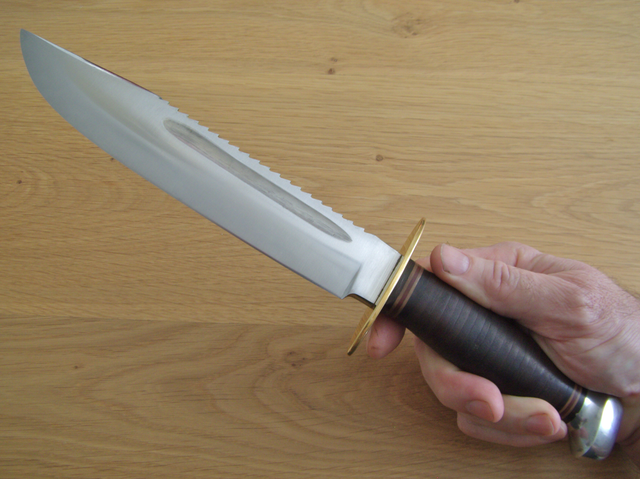
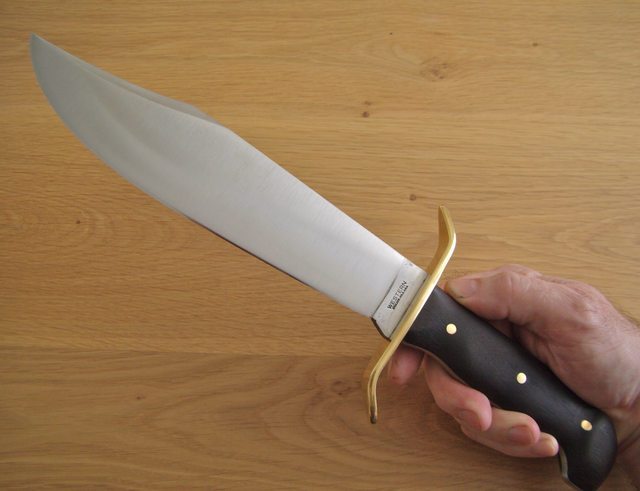
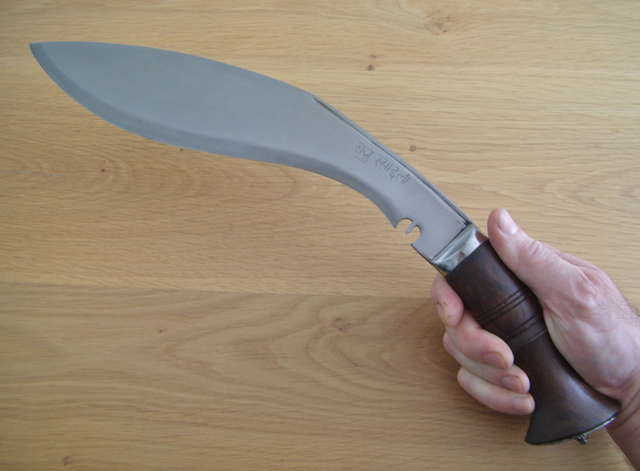
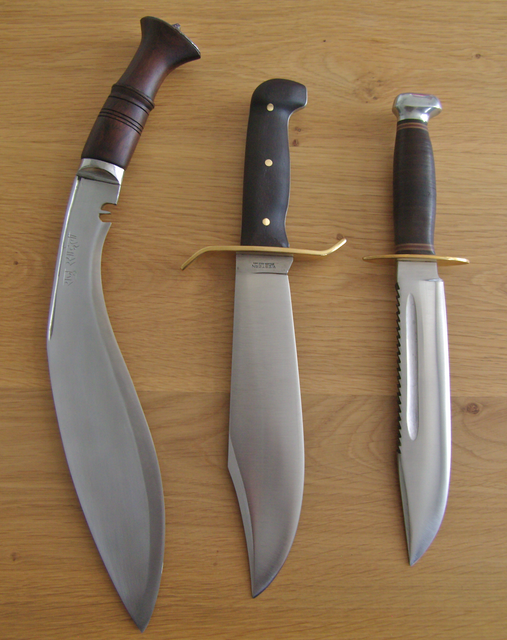
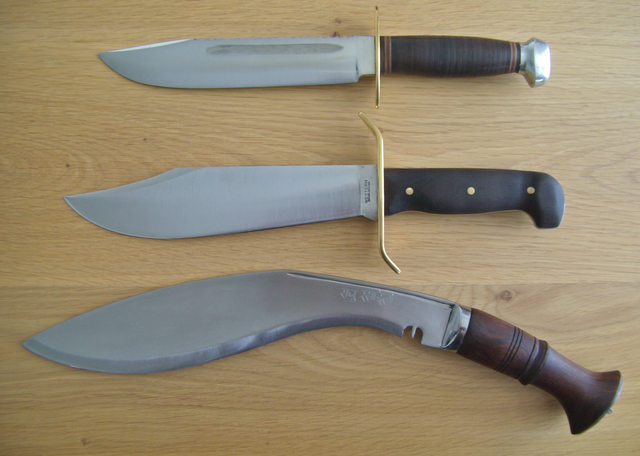
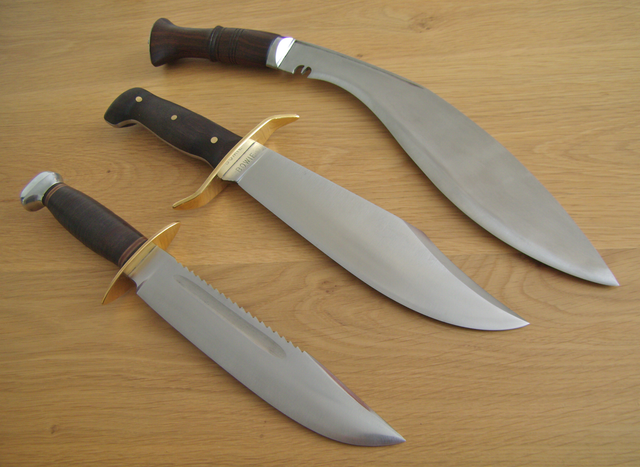
Last post by kwakster - October 21, 2026, 03:28:51 PMMy three choppers together: the modified Solingen Scout knife, a modified 1964 Western Bowie, and a Tora Blades Camping kukri.
#15
Knife Sharpening / Re: Knife modification - XL So...
Last post by kwakster - October 21, 2026, 03:27:50 PMThe knife at this moment.


#16
Knife Sharpening / Re: Knife modification - XL So...
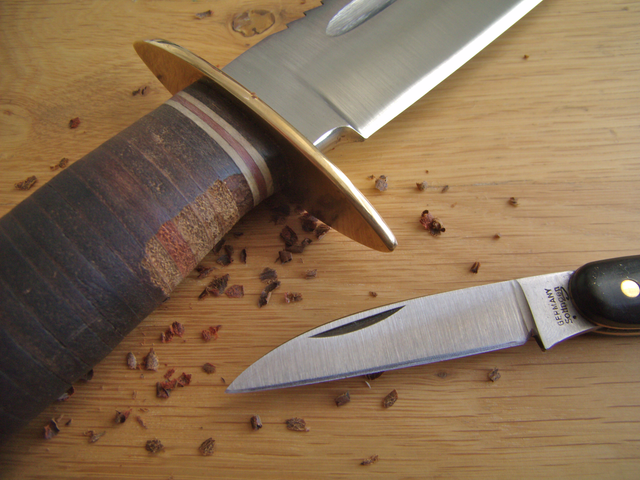
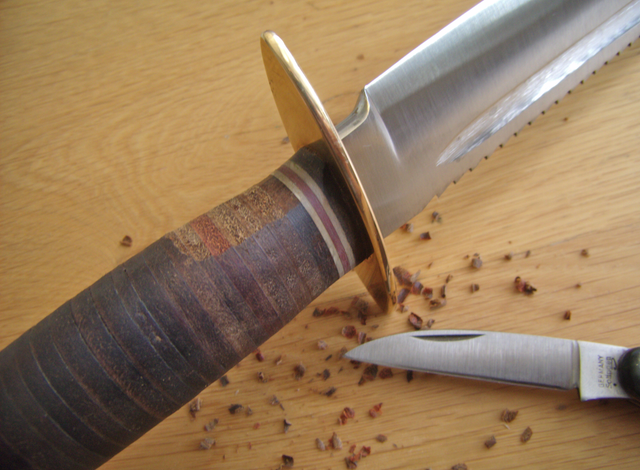
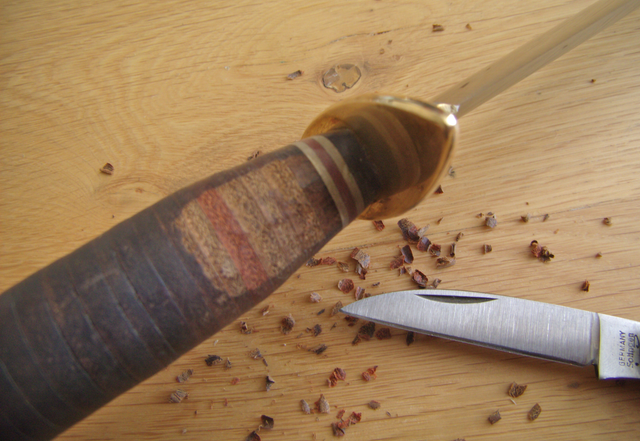
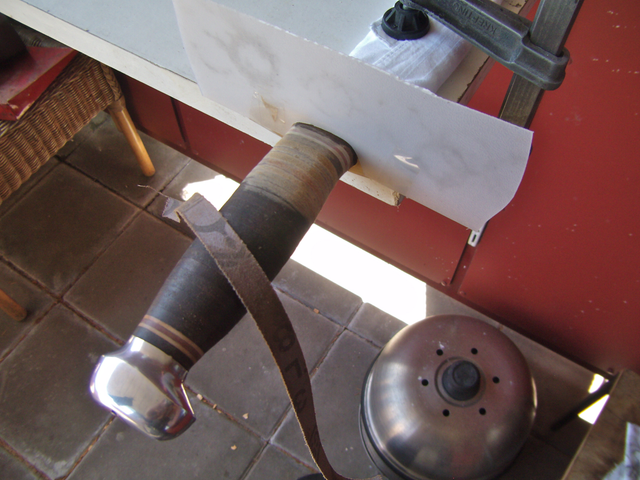
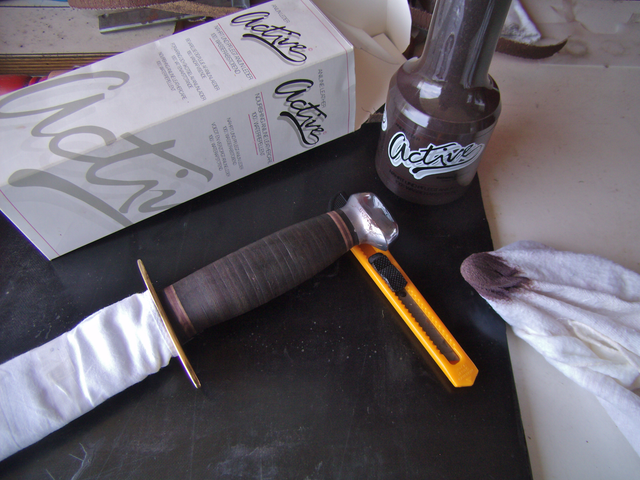
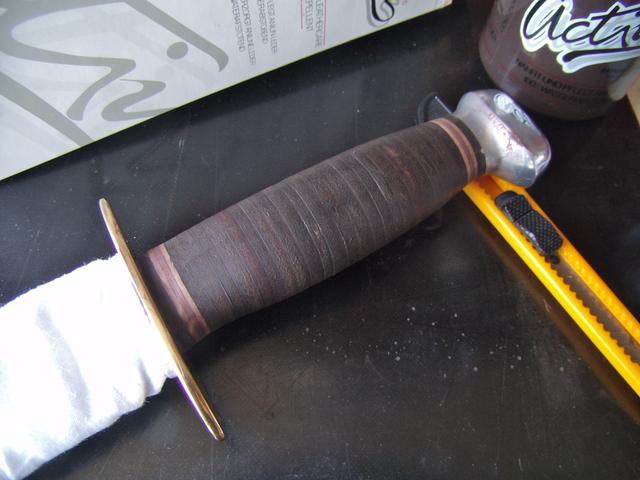
Last post by kwakster - October 21, 2026, 03:27:08 PMAfter testing the knife a few times in the woods i modified the handle a bit more to my liking.
Next i recolored the leather, and soon a few layers of Granger's wax will follow.

 [/url
[/url
Next i recolored the leather, and soon a few layers of Granger's wax will follow.
[/url #17
Knife Sharpening / Re: Knife modification - XL So...
Last post by kwakster - October 21, 2026, 03:26:18 PMThe knife as it looks at this moment.
I made the guard a bit smaller, rounded the edges, then sanded & polished the brass a bit on a felt wheel with some green compound.
Glued it back in place with 2-component epoxy, then glued all the washers together on the tang and put the pommel back on with some Teflon tape on the threaded tang end.
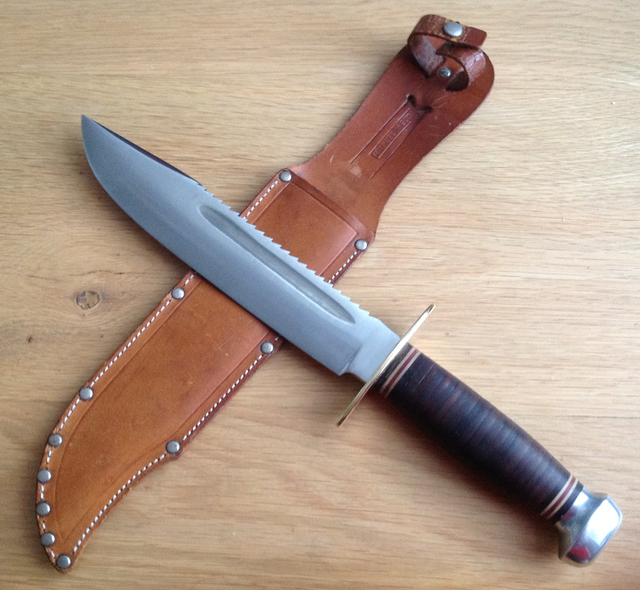
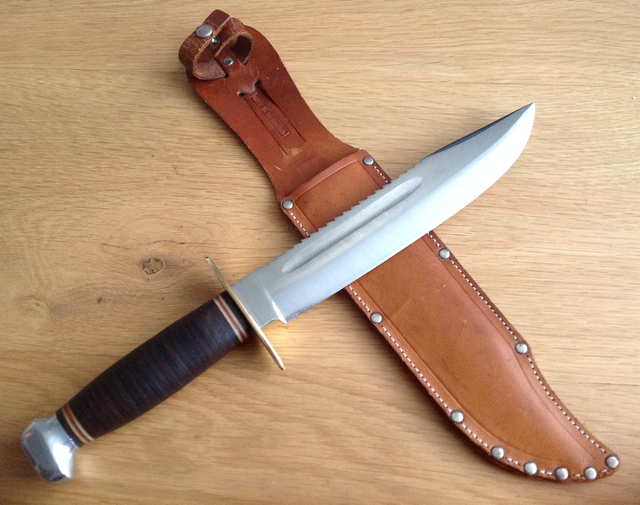
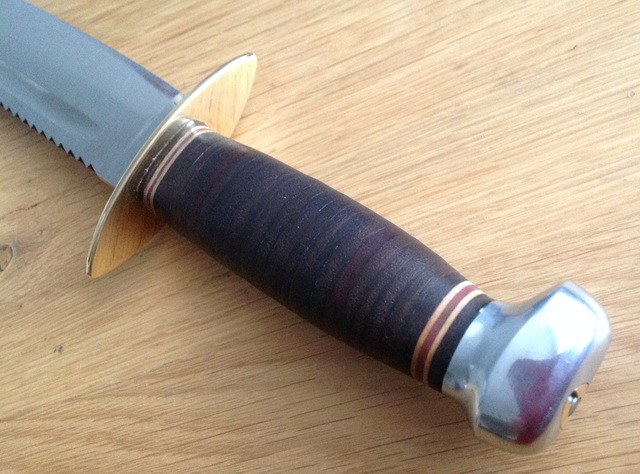
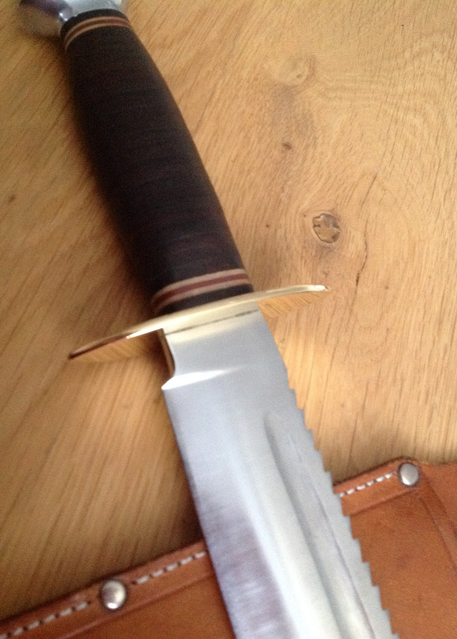
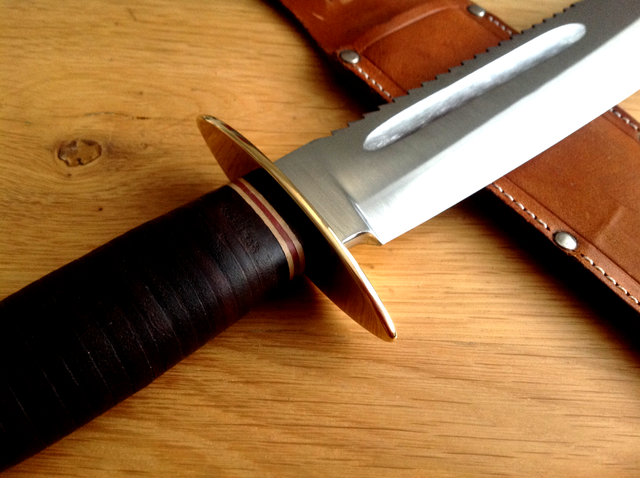
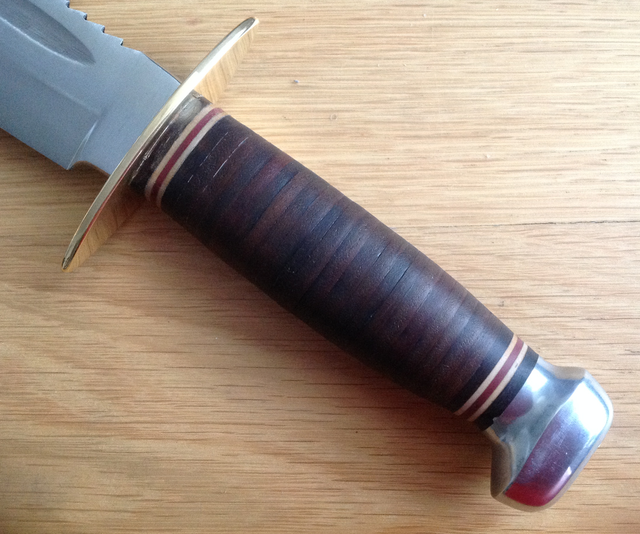
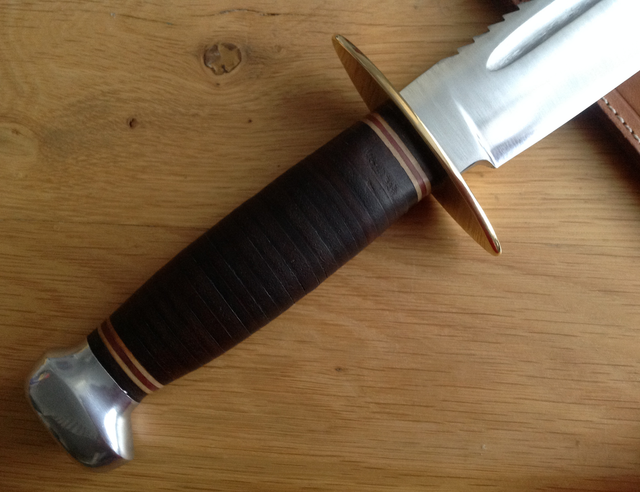
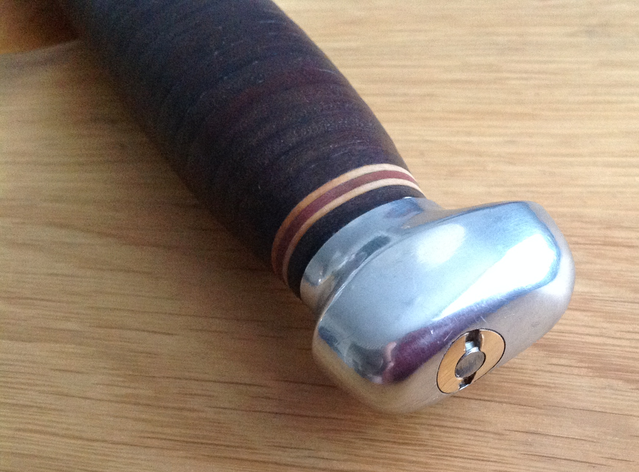
I made the guard a bit smaller, rounded the edges, then sanded & polished the brass a bit on a felt wheel with some green compound.
Glued it back in place with 2-component epoxy, then glued all the washers together on the tang and put the pommel back on with some Teflon tape on the threaded tang end.
#18
Knife Sharpening / Re: Knife modification - XL So...
Last post by kwakster - October 21, 2026, 03:24:55 PMCurrently busy making the new guard from a flat piece of brass i had lying around from a previous project.
The center hole that was already there was enlarged with a file to fit this knife, the rough outer shape was cut out with a small hacksaw, the result was ovalized on a normal bench grinder, after which the outer edge was ground square on the Tormek.
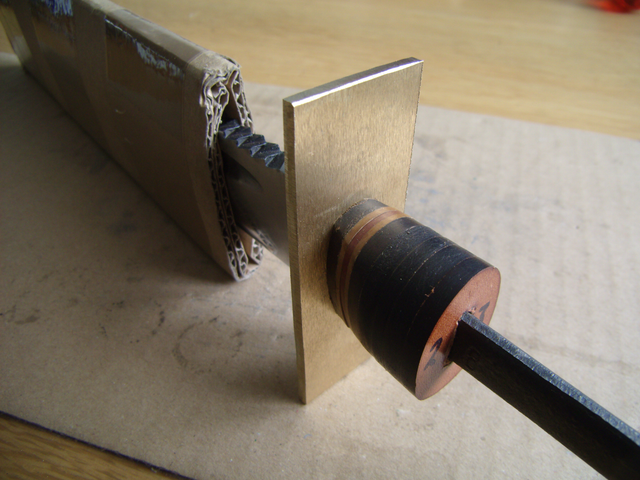
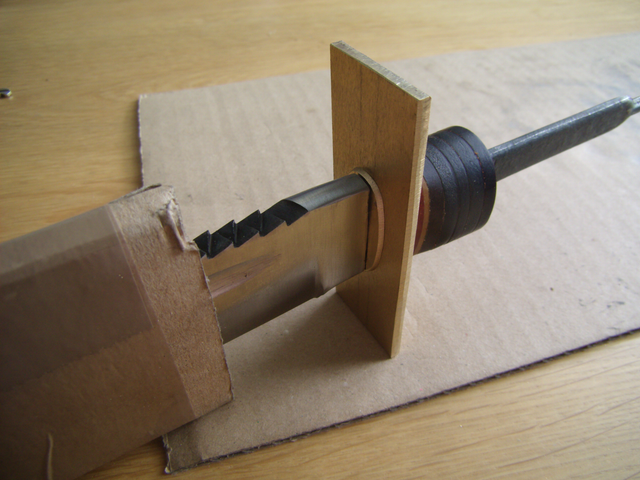
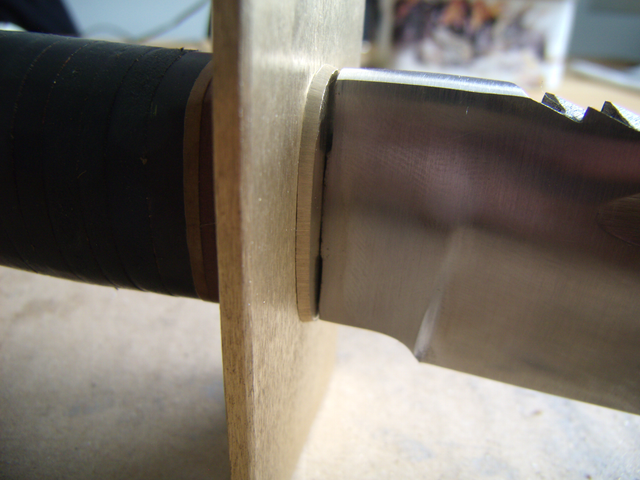
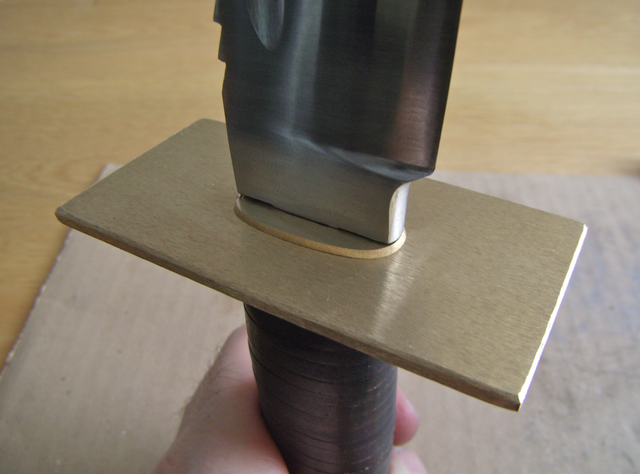
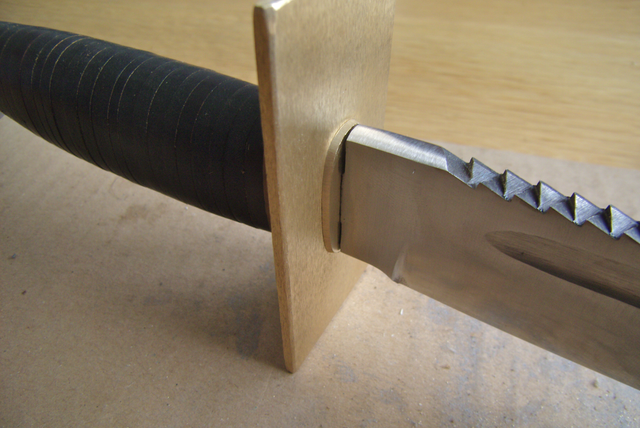
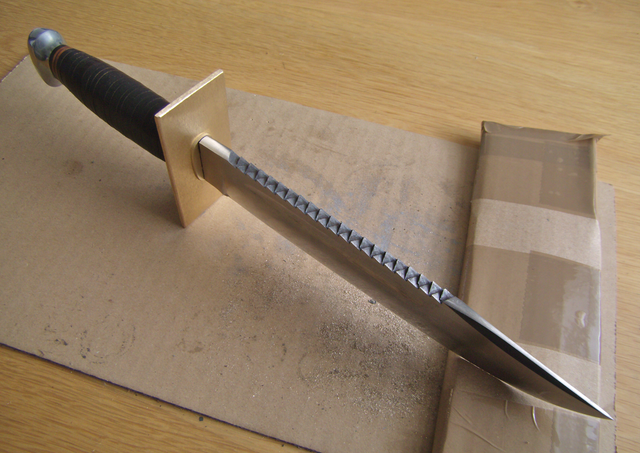
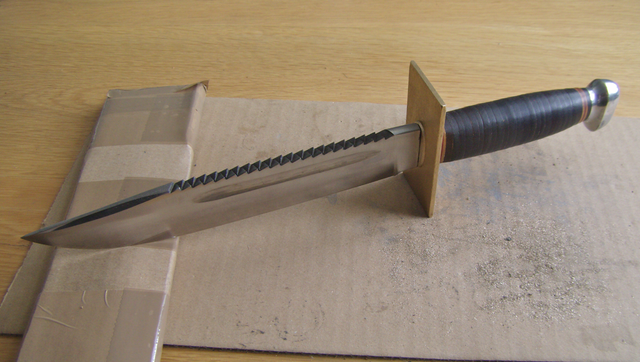
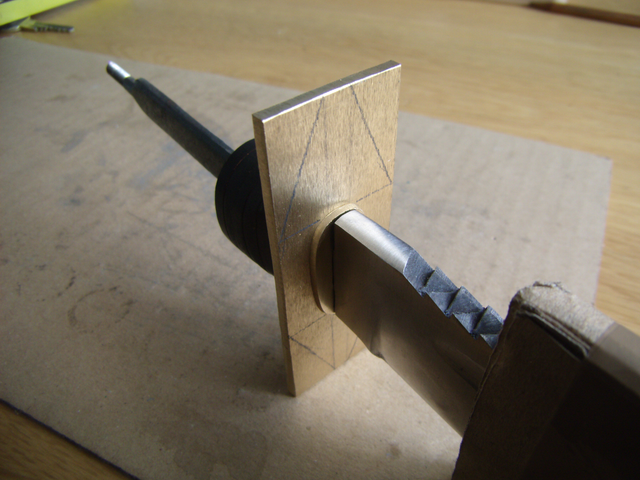
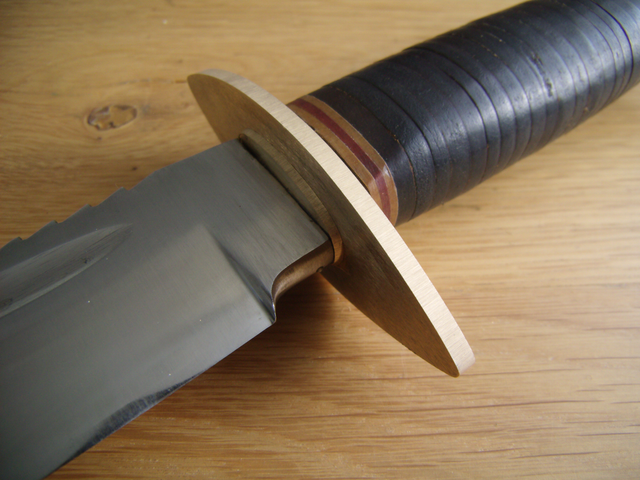
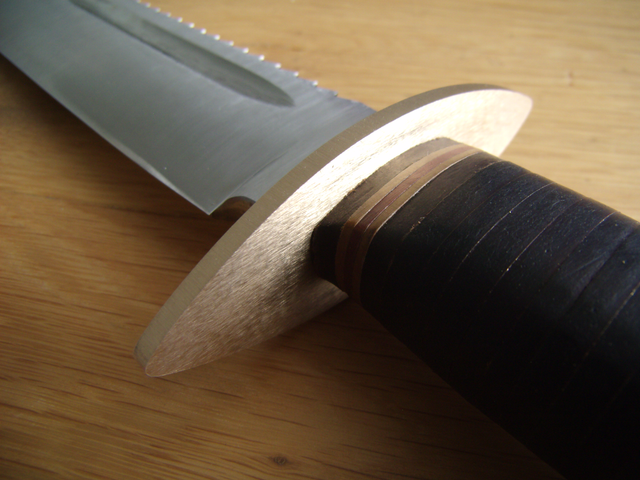

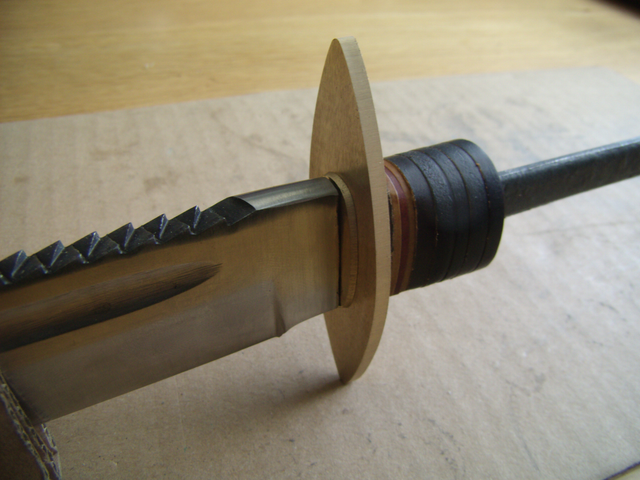
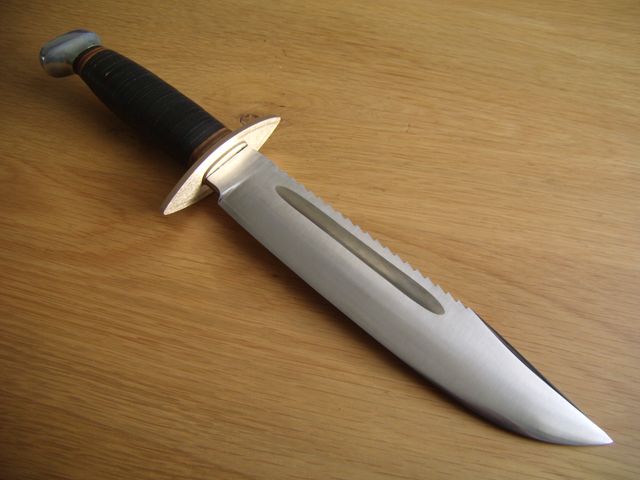
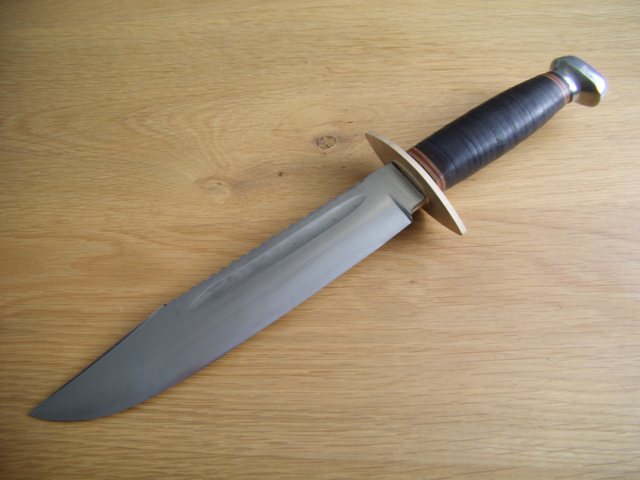
More testing is needed to decide upon the final size & shape of the guard, so it's likely there will be changes in the near future.
The old guard was reshaped & maybe it will be reused as a cover plate on top of the new guard, but i still have to fit things a bit better.
Put the knife together temporarily for the pics.
The center hole that was already there was enlarged with a file to fit this knife, the rough outer shape was cut out with a small hacksaw, the result was ovalized on a normal bench grinder, after which the outer edge was ground square on the Tormek.
More testing is needed to decide upon the final size & shape of the guard, so it's likely there will be changes in the near future.
The old guard was reshaped & maybe it will be reused as a cover plate on top of the new guard, but i still have to fit things a bit better.
Put the knife together temporarily for the pics.
#19
Knife Sharpening / Re: Knife modification - XL So...
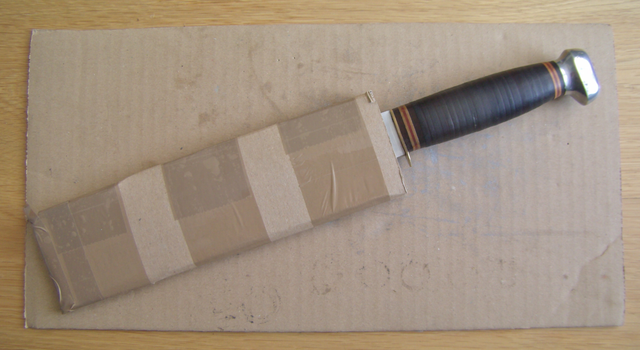
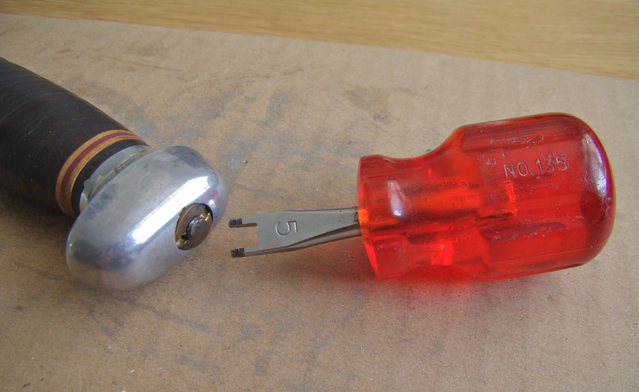
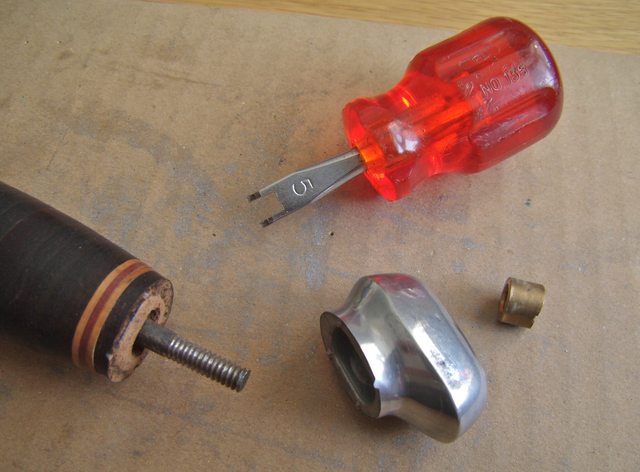
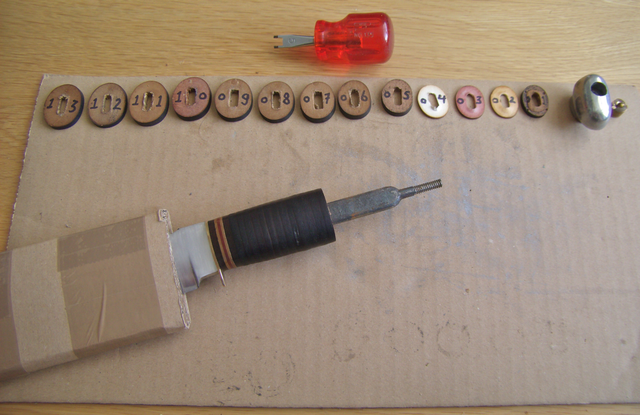
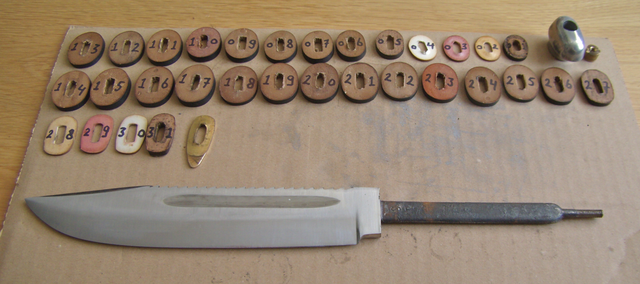
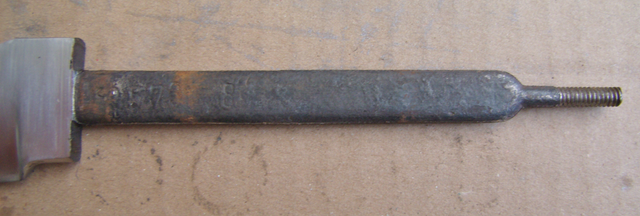
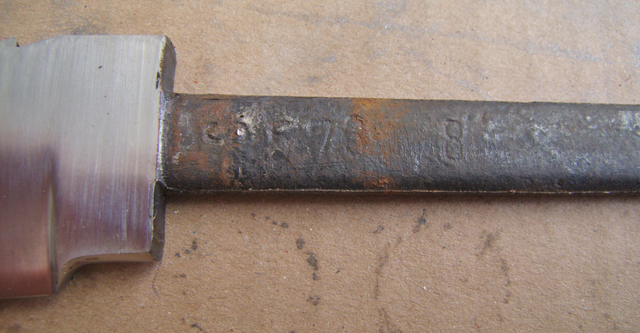
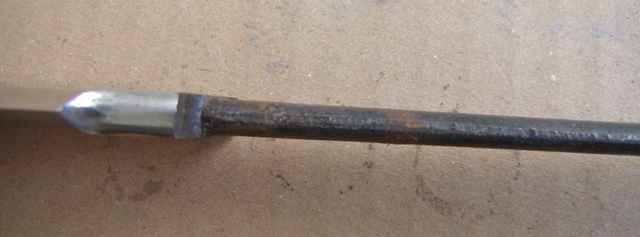
Last post by kwakster - October 21, 2026, 03:23:34 PMTaking the handle apart:
#20
Knife Sharpening / Re: Knife modification - XL So...
Last post by kwakster - October 21, 2026, 03:22:16 PMYesterday i got the chance to test the knife again in the Veluwe nature reserve near Kootwijk, this time with the somewhat thinned out blade & an apex that fitted the 30 degree slot in my Tormek WM200 AngleMaster almost perfectly.
The area has a lot of walking trails, and the knife was used for the clearing of overgrowth etc.
In short: it performed very well in that role & with the thinner edge angle.
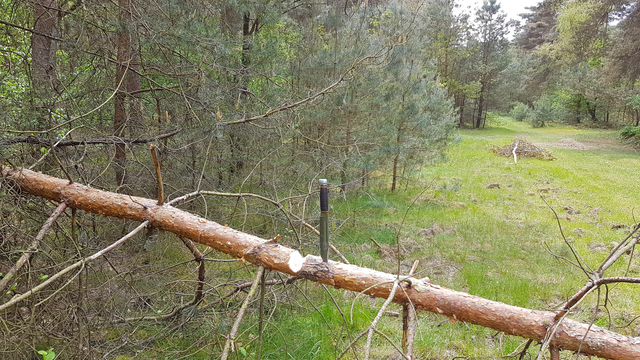
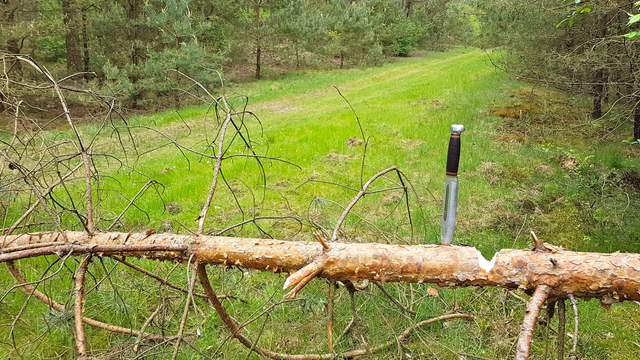
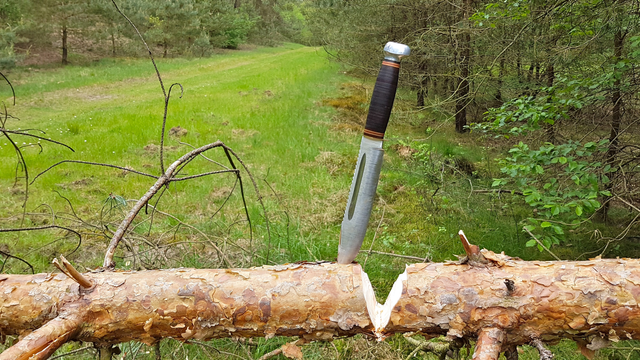
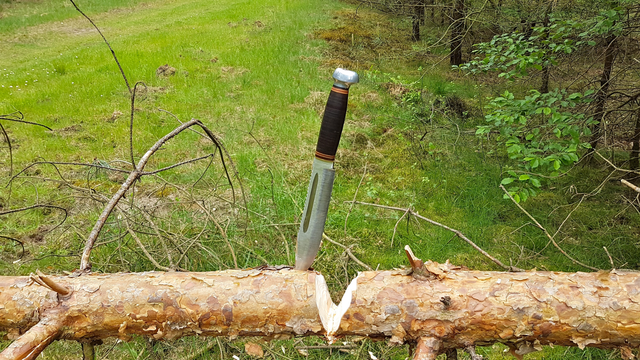
When i left home the edge could just whittle a chest hair towards the hairpoint (more like slicing it diagonally, so no long thin curls), and after chopping through quite a bit of green branches varying in thickness from pencil-size to that of a grown man's upper arm as well as the small fallen tree in the pictures the edge could still shave the hair on the back of my hand on skin level.
Not quite as easy as before, but it could be done.
Also the weight of the knife together with the full convex blade shape made the knife an excellent chopper that bit deep without ever getting stuck: the wood had no grip on the blade whatsoever.
Wristsize green branches would take 1 chop, while upper arm thick ones took 3 to 4 chops.
The knife also performed well on thinner stuff like twigs and bramble shoots: 1 light chop without feeling any resistance.
I'm sure that a thin lightweight machete would do better in the last category, but the knife was no slouch either.
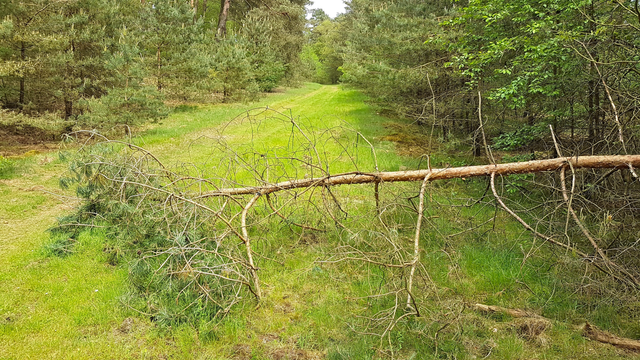
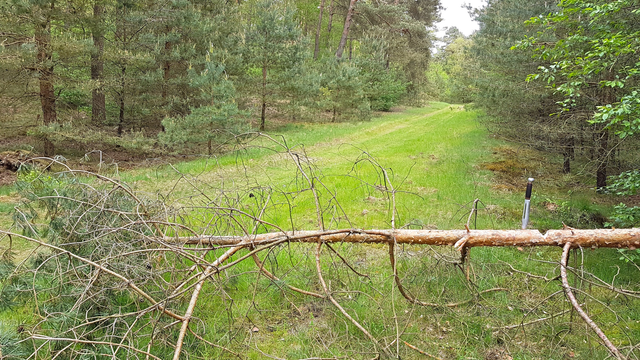
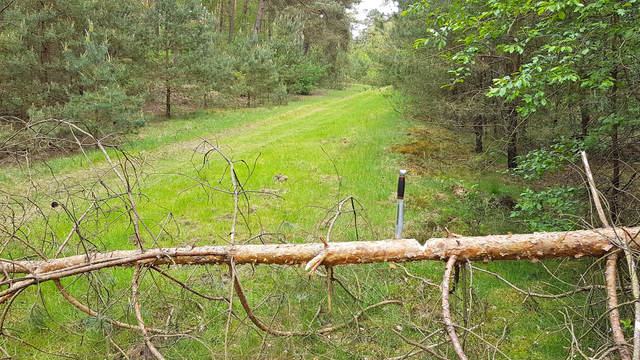
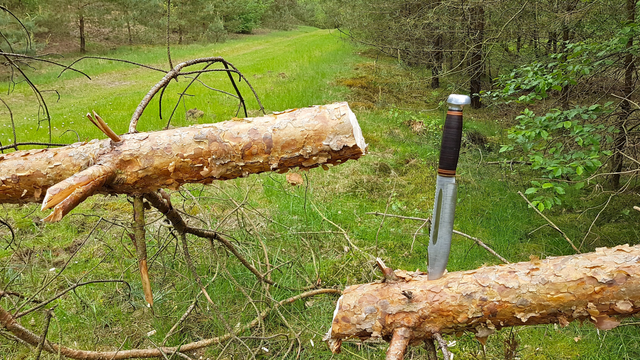
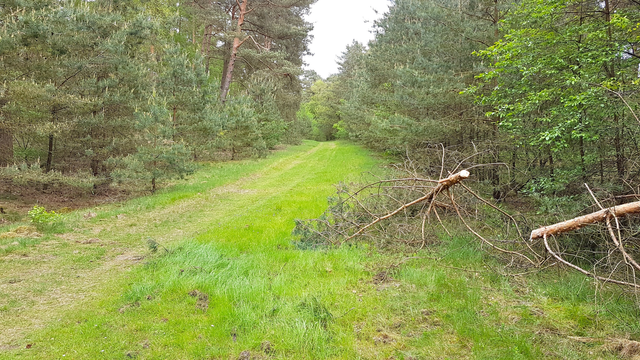
There were also some negatives:
- The current "guard" is much too small to guard anything, and it's more a pointy nuisance than anything else.
- The leather handle is thicker in front and tapers towards the pommel, so when chopping wood your hand naturally shifts to the very end of the handle.
Although this position works very well for harder chops on for instance the small tree in the pictures, the current handle shape is not the best for snap cuts, like you would mostly use on anything thinner.
Both of these things i hope to solve in the coming weeks.
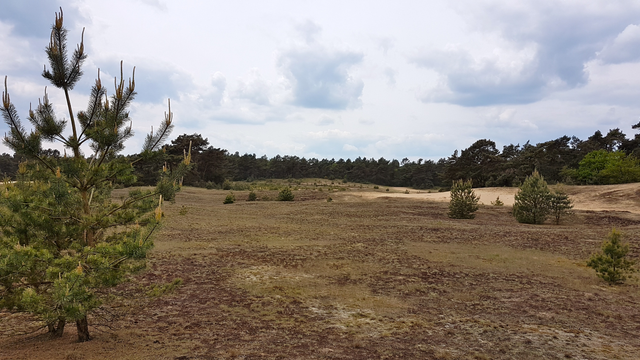
A few impressions of the sand drift that forms the center of the wooded area:
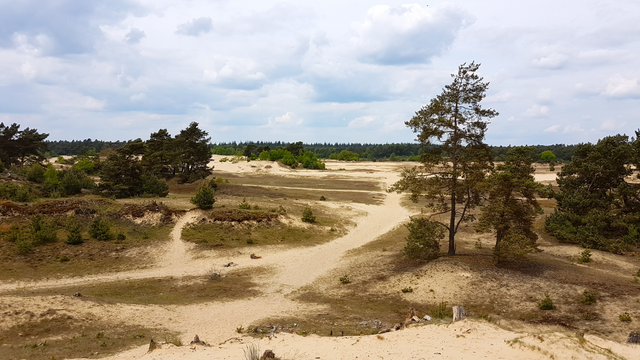
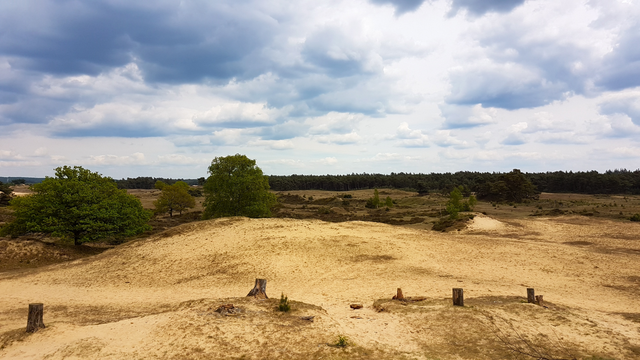
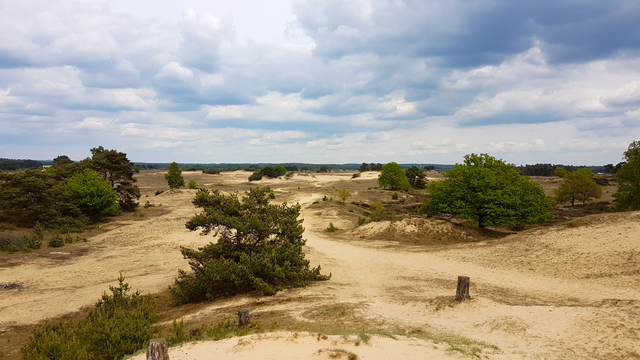
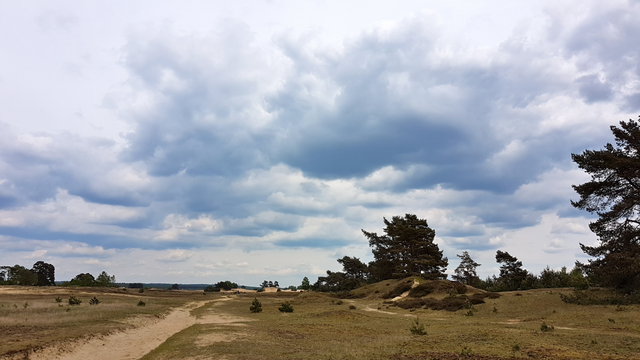
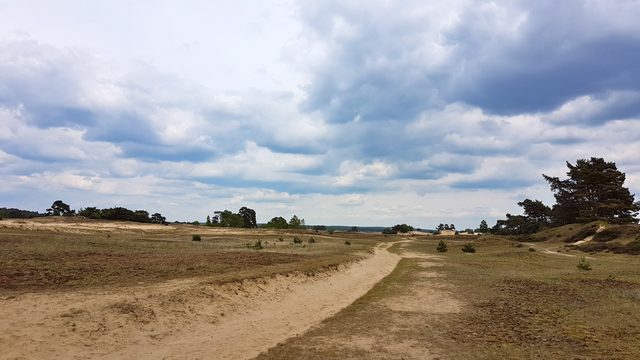
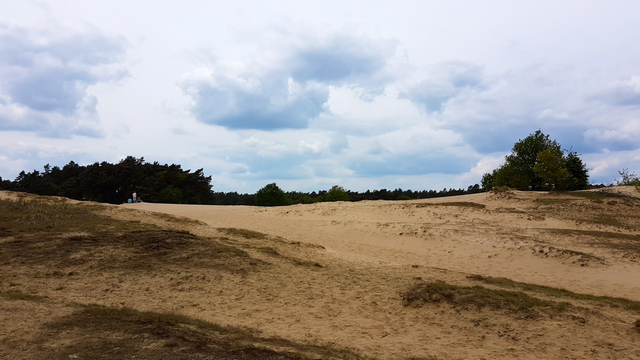
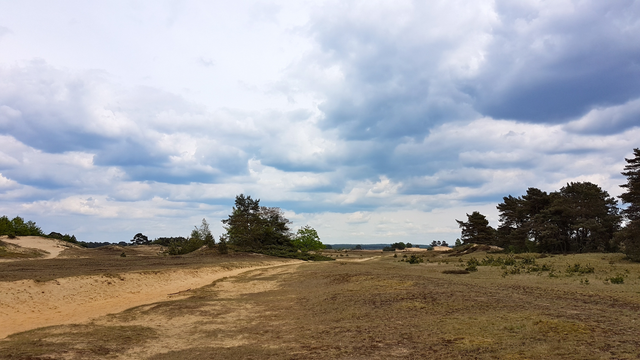
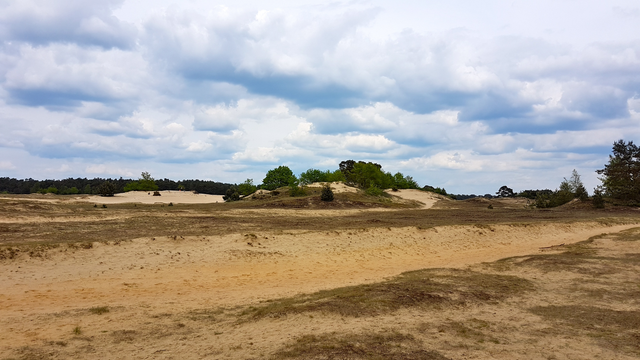
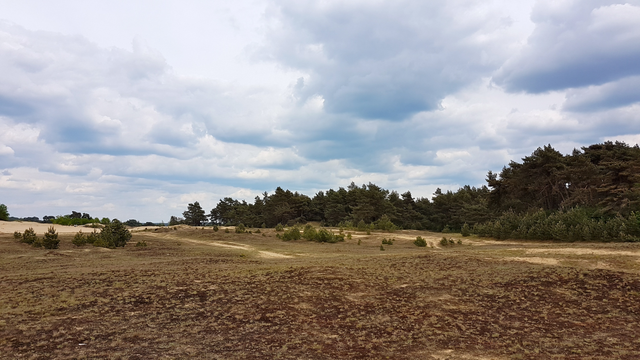
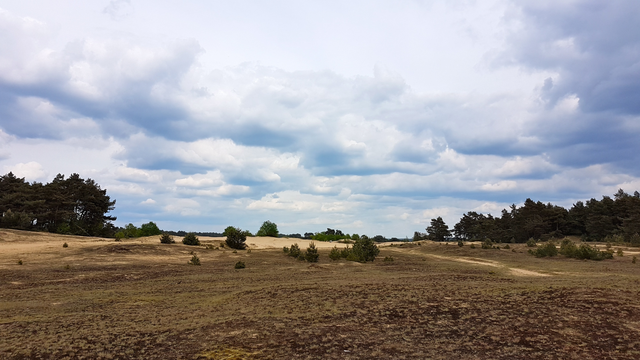
The area has a lot of walking trails, and the knife was used for the clearing of overgrowth etc.
In short: it performed very well in that role & with the thinner edge angle.
When i left home the edge could just whittle a chest hair towards the hairpoint (more like slicing it diagonally, so no long thin curls), and after chopping through quite a bit of green branches varying in thickness from pencil-size to that of a grown man's upper arm as well as the small fallen tree in the pictures the edge could still shave the hair on the back of my hand on skin level.
Not quite as easy as before, but it could be done.
Also the weight of the knife together with the full convex blade shape made the knife an excellent chopper that bit deep without ever getting stuck: the wood had no grip on the blade whatsoever.
Wristsize green branches would take 1 chop, while upper arm thick ones took 3 to 4 chops.
The knife also performed well on thinner stuff like twigs and bramble shoots: 1 light chop without feeling any resistance.
I'm sure that a thin lightweight machete would do better in the last category, but the knife was no slouch either.
There were also some negatives:
- The current "guard" is much too small to guard anything, and it's more a pointy nuisance than anything else.
- The leather handle is thicker in front and tapers towards the pommel, so when chopping wood your hand naturally shifts to the very end of the handle.
Although this position works very well for harder chops on for instance the small tree in the pictures, the current handle shape is not the best for snap cuts, like you would mostly use on anything thinner.
Both of these things i hope to solve in the coming weeks.
A few impressions of the sand drift that forms the center of the wooded area: