News:

Welcome to the Tormek Community. If you previously registered for the discussion board but had not made any posts, your membership may have been purged. Secure your membership in this community by joining in the conversations.
www.tormek.com

Main Menu
Menu

Show posts

This section allows you to view all posts made by this member. Note that you can only see posts made in areas you currently have access to.

Show posts Menu

Messages - Brock O Lee

#1
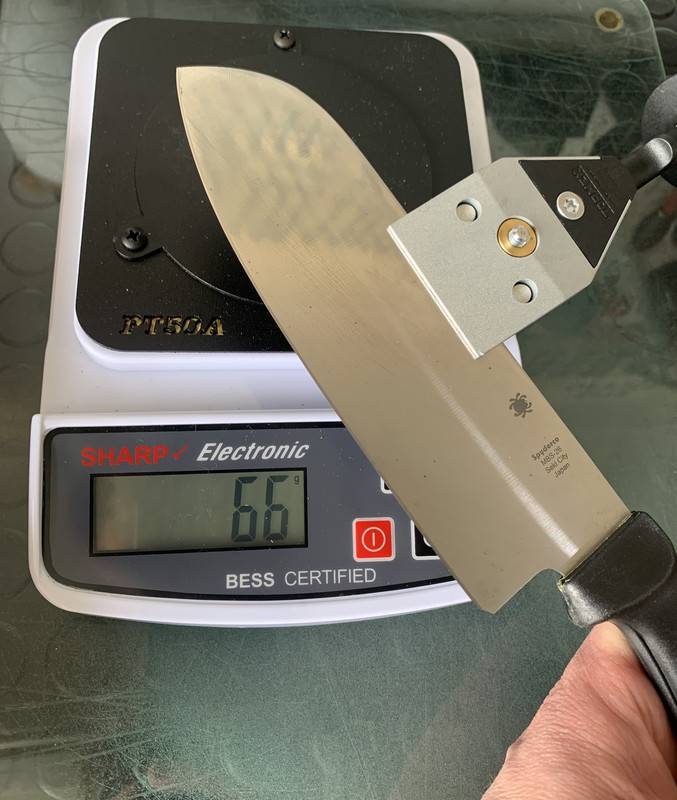
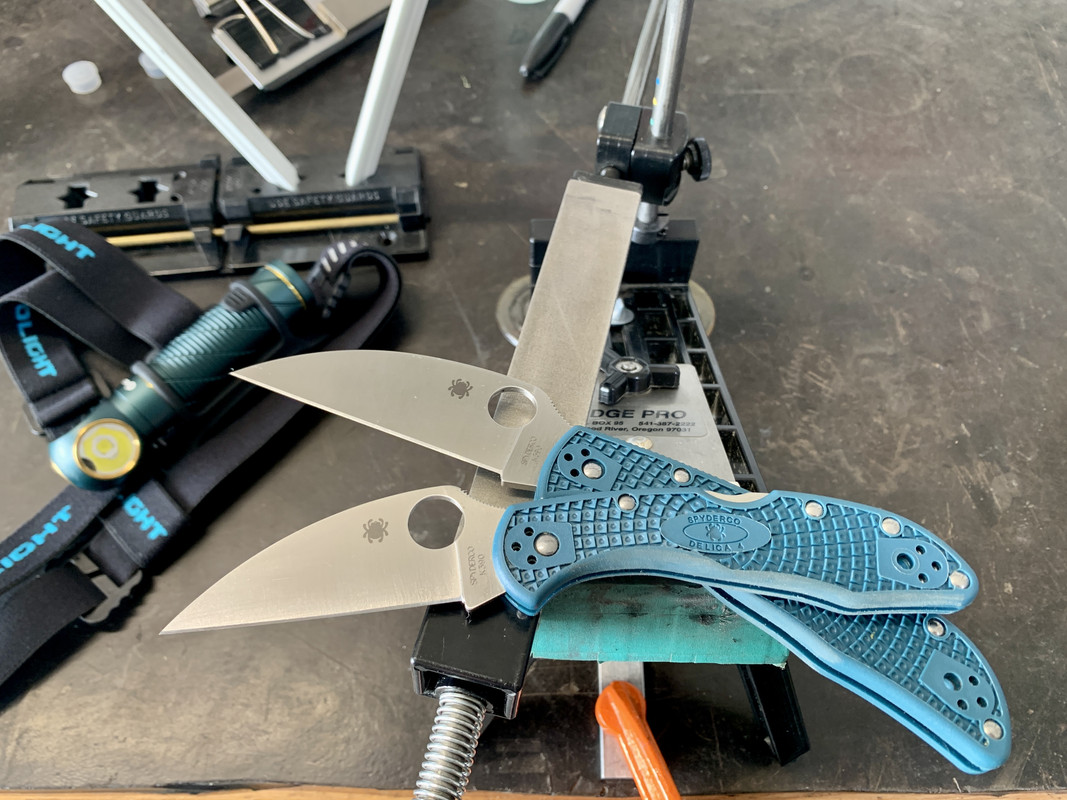
I've used the small knife holder to sharpen knives (even large knives) which do not clamp well on the blade, like this Spyderco with a full flat grind and a distal taper. It works well. Just make sure your blade's edge is perfectly in line with the centerline of the jig, otherwise you'll get a wider bevel on one side.

However very long blades might be challenging because your support is not near the midpoint of the blade.
#2
Knife Sharpening / Re: A new resource
May 04, 2026, 09:05:58 AM
Quote from: tgbto on May 04, 2026, 08:54:19 AMThis report was shared by the author and discussed in this thread on the forum

Thank you for the reference. 👍
#3
Knife Sharpening / Re: A new resource
May 01, 2026, 12:42:39 PM
Thanks for sharing!

Interesting reading, and much respect for the effort and financial commitment to produce this report. I filed it for future reference.

A few things caught my attention regarding the BESS results:
1. I am surprised that the sharpened blades did not achieve sub-100 BESS scores? Except for one outlier in the raw results.

2. The report mentions that sub-130 BESS indicates a fully deburred edge? I remember Wootz considered sub-100 BESS to be fully deburred. He routinely achieved much lower than that, using the deburring techniques mentioned in the report.

However, I am aware that BESS scores are dependent on test technique and test media (clips vs spool), so that might explain the differences.

I bring this up as hobbyist, and from my own experience, my 100+ BESS edges often have room for improvement. I find that 70-80 BESS scores are very achievable on a Tormek and Edge Pro (after deburring steps). I have even managed mid-50's on a few occasions, so the high BESS numbers in the report seems odd.

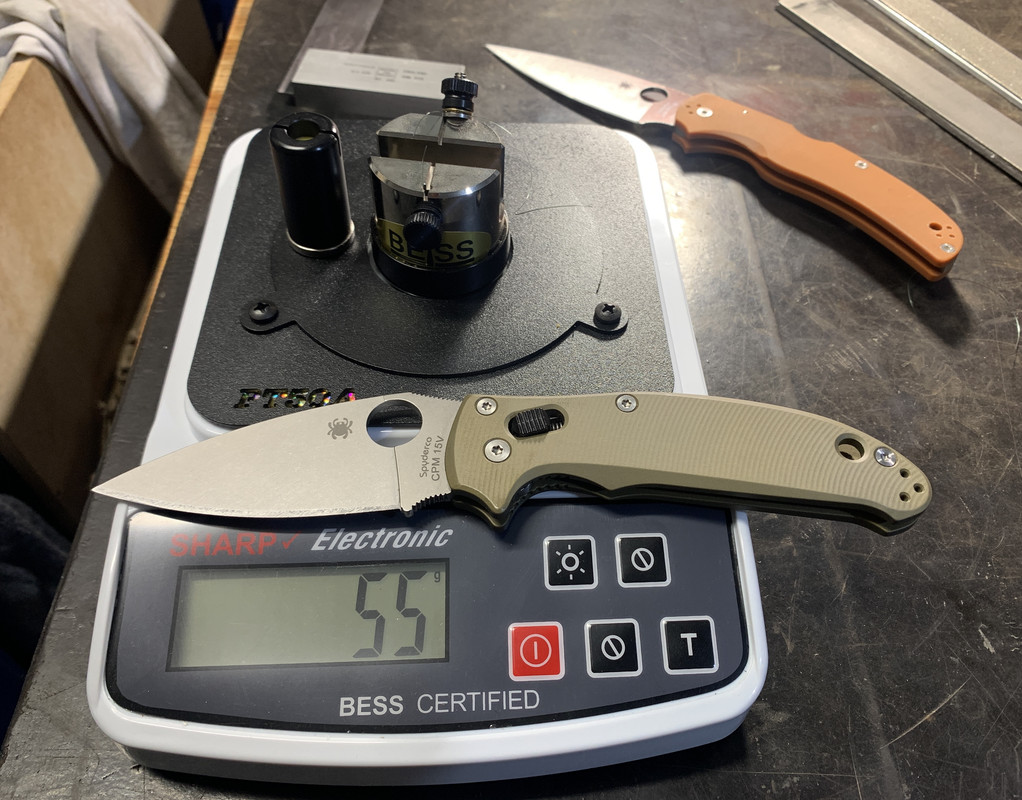
For context, this edge was from the Edge Pro, at 16 dps, finished on 1000 grit diamond, stropped on 1 micron diamond spray on basswood. The Spyderco Native Chief in CPM-REX-45 in the background had the same treatment and scored 58.
#4
Quote from: tgbto on April 30, 2026, 02:49:17 PM
Quote from: Brock O Lee on April 29, 2026, 02:01:36 PMI have found that it is much easier to get low BESS scores when I sharpen at low angles (sub-15 dps). In my experience diamond stones tend to produce lower scores than the SG-250, and higher grit finishes (1000+) produce lower scores than lower grit finishes.

Just to make sure : when you talk about lower scores, do you mean lower BESS number or lower sharpness ?


I meant lower BESS scores.

To rephrase, I've noticed that the SE-250 (extra fine diamond wheel) gives me lower BESS scores (sharper edge) than the SG-250 (standard stone wheel), on the same kitchen knife (Spyderco MBS-26 steel similar to VG10), at the same angle, using the same technique.

I have not experimented enough to say this is definitive. At the moment I suspect it could be due to grit differences, or that one abrasive cuts a certain steel cleaner than the other, or something else?

That is going deep into the weeds... Take it as one data point from "a guy in his garage seeing a thing". 🙂
#5
That sounds like a massive burr, when it is visible as you hone...

I'd suggest that you will likely get better end results when you minimise the size of the burr on the stones, with very light alternating passes before you deburr/hone. I'd say if you can see a burr with the naked eye at arms length under normal shop lightling it is likely too large.

When I hone free hand on the leather wheel, I find this to be useful to find the approximate angle to hone at
- start at a shallow angle, so that you contact the bevel shoulder, not the apex.
- increase the angle until you make full contact with the bevel on the wheel. The contact feels smooth at this stage.
- increase the angle a fraction to hone the very apex. Contact will feel less smooth at this stage.
- the steps above take only a second or two.

Err on the side of very light pressure and too shallow angle, rather than too much pressure and too steep angle. It helps to avoid rounding the apex. You can always come back for another pass at a slightly steeper angle if you did not get the desired result the first time.

As a side note, I do not like the composite rubber wheel much for deburring. Wootz estimated the embedded grit size to be +-30 micron, if I remember correctly. This is very large. In comparison, alu oxide (and Tormek compound) grit is more like 3 micron. To put that into perspective, a very sharp edge has an apex radius of less than 1 micron.
#6
Quote from: John_B on April 28, 2026, 11:22:54 PMIt may be due to the steel used in some less expensive knives. These knives are extremely hard to sharpen to a fine edge; the burr essentially changes sides when you try and hone it.

Agree. In my experience "cheap knives" often means:
- non-ideal steel chemistry and/or
- non-ideal heat treatment protocols and/or
- non-ideal hardened steel structure at the edge and/or
- lower than ideal hardness (sub 60 HRC).

This all shows up at the burr. These burrs tend to be soft and "gummy", flopping from side-to-side, refusing to cut off cleanly. This results in incomplete deburring, sub-par fine edge and bad edge longevity.

It is striking how easily properly heat treated but hard pocket-knife steels deburr in comparison. Steels like CPM-SPY27 (@62 HRC), CPM-Magnacut (@64 HRC), CPM-15V (@67 HRC) etc. Almost no effort required.
#7
General Tormek Questions / Re: Good Light
April 29, 2026, 03:25:33 PM
Agree, I use a Olight Perun 3 headlamp, on full brightness.
#8
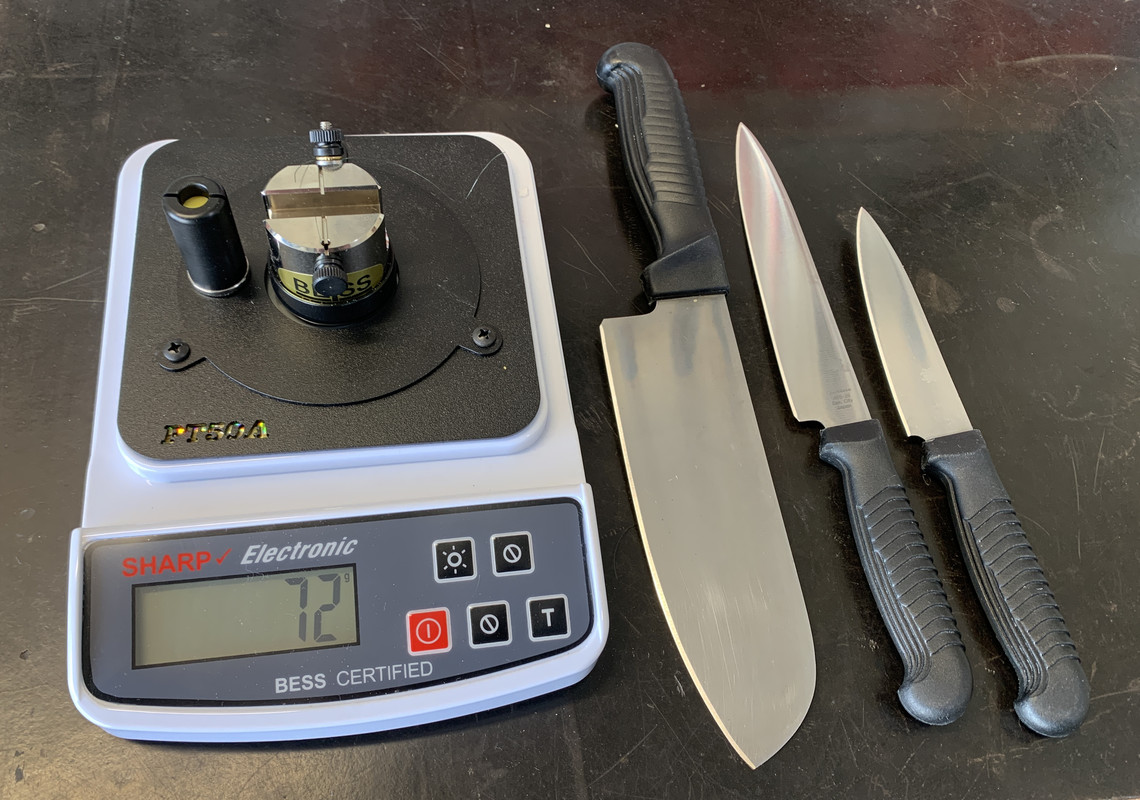
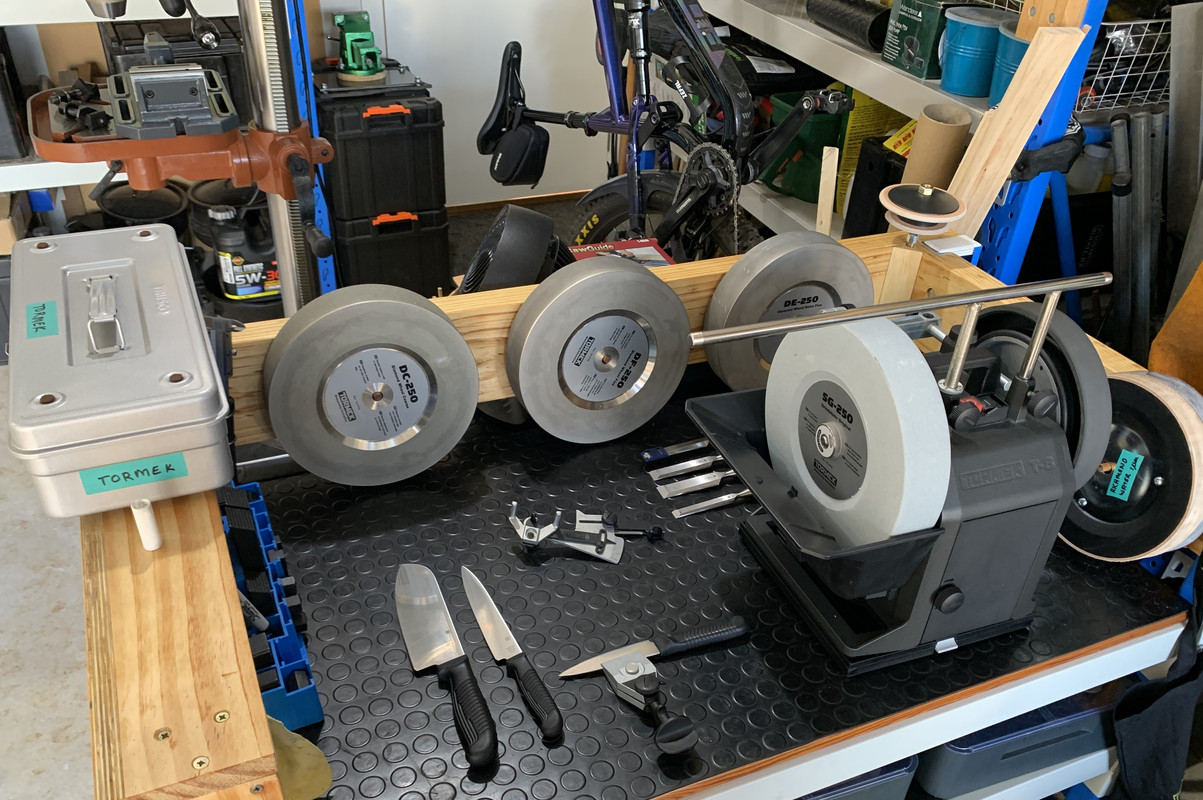
This was a good result on our Spyderco kitchen knives the other day. They all scored around 70-80 BESS if I remember correctly.

T8 with SG-250, stropped on Tormek paste on leather wheel.


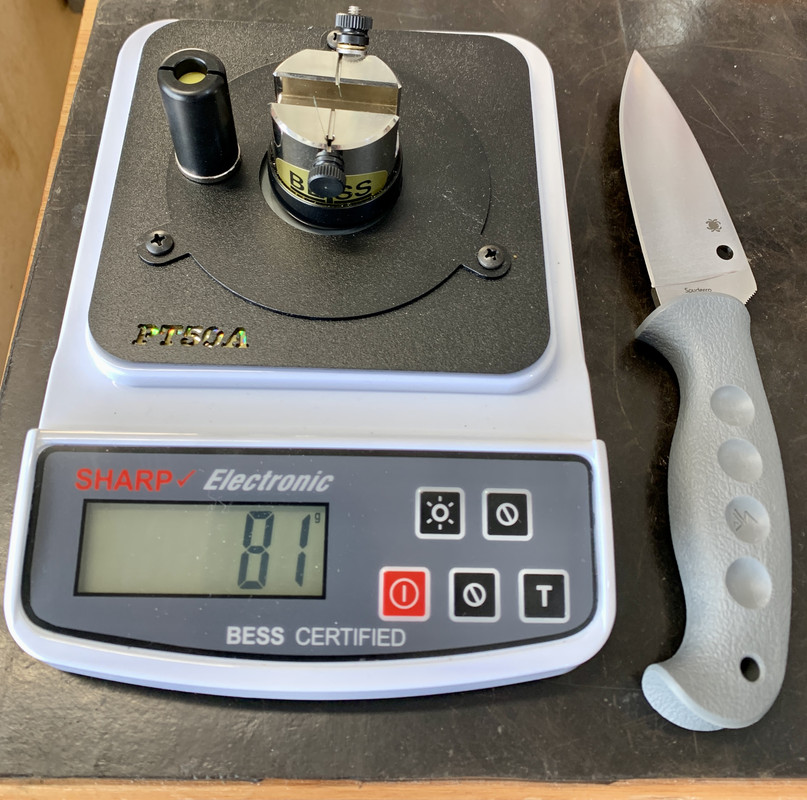
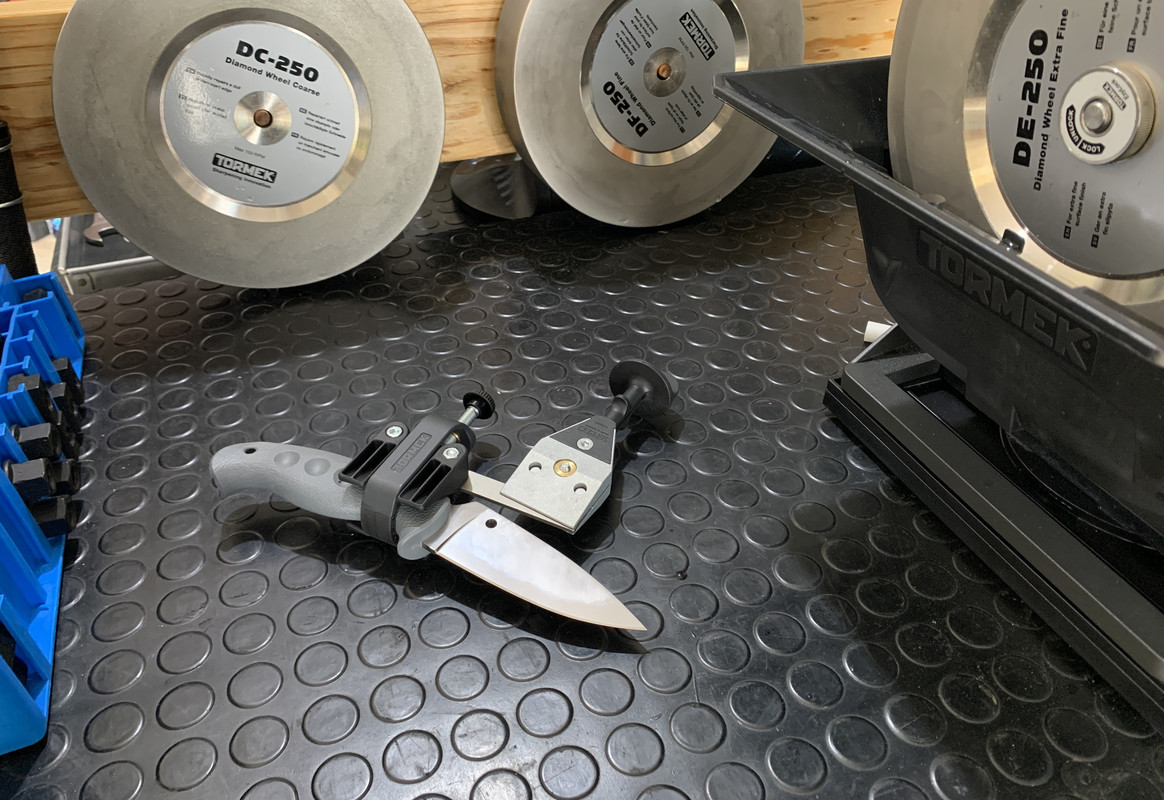
This Spyderco Temperance fixed blade in CPM-Cruwear got the diamond wheels, up to extra fine. Stropped on a leather wheel with 1 micron diamond spray.


I have found that it is much easier to get low BESS scores when I sharpen at low angles (sub-15 dps). In my experience diamond stones tend to produce lower scores than the SG-250, and higher grit finishes (1000+) produce lower scores than lower grit finishes.

I used to chase BESS scores initially. It is a good tool to measure progress while you develop a technique. After a while I got too lazy to fire up the BESS tester, but I still do occasionally. In my experience you quickly get a feel for a sharp burr-free edge by how effortlessly it glides through phone book or cigarette paper, you don't even need to test.
#9
That regrind looks like a professional job. Respect!
#10
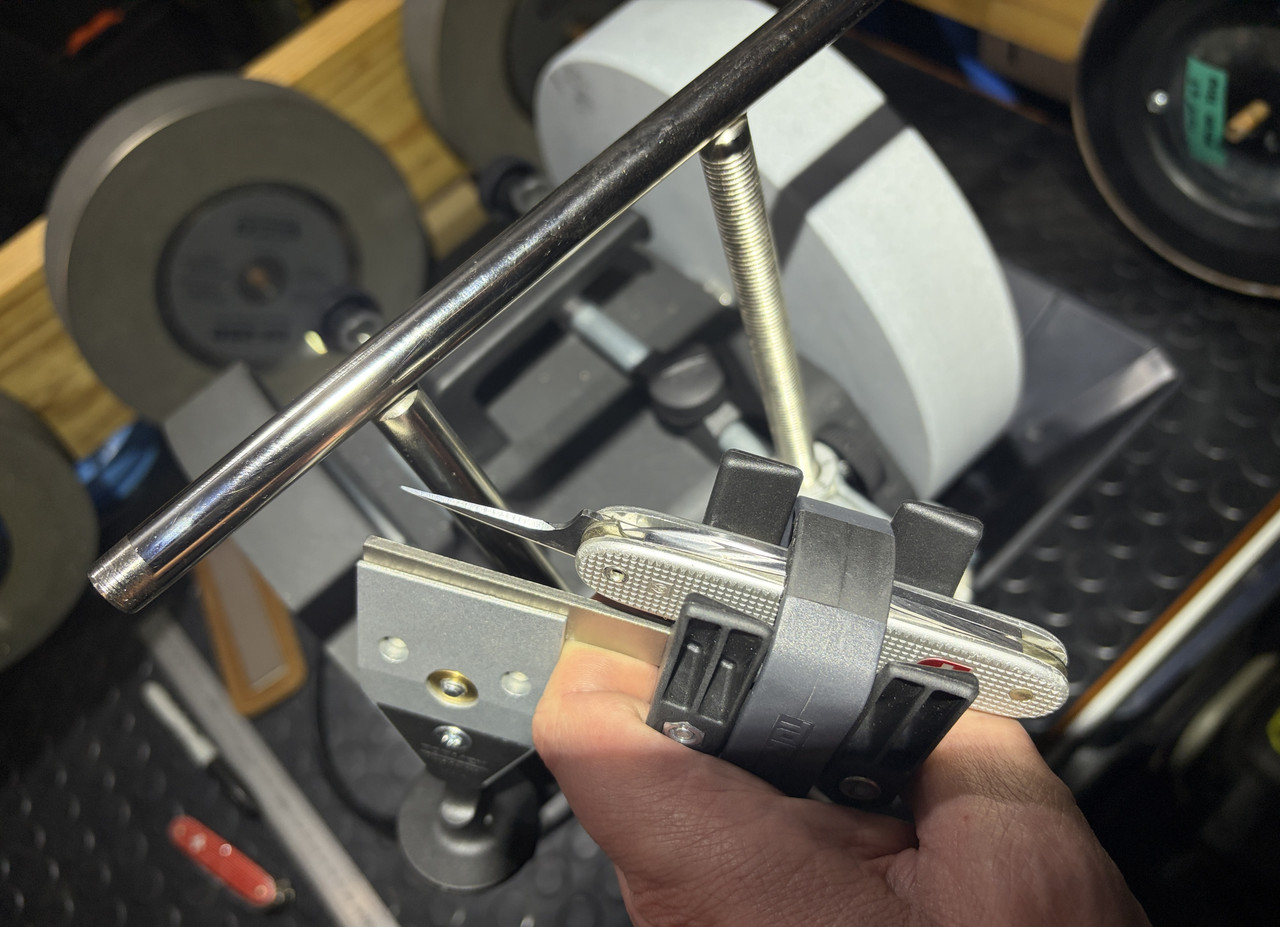
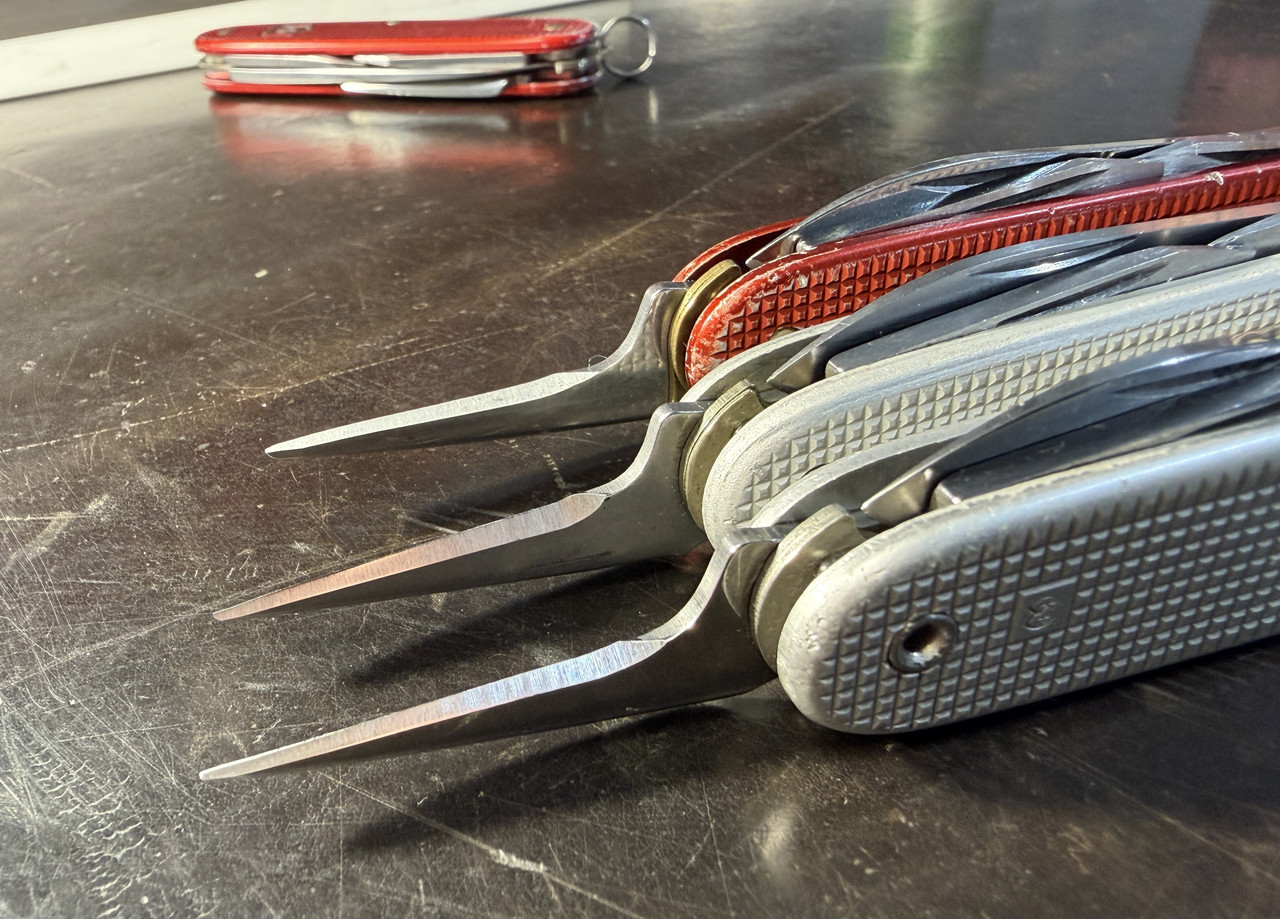
This week I found an effective way to sharpen the inline awl on the Victorinox Swiss Army 93mm alox models, like the Pioneer.

I've mangled my fair share of inline awls over the last 25+ years. Both while using them, and while attempting to resharpen them, freehand and with jigs... So this feels like a long overdue victory...

I use a Tormek T8 with:
- multi base (to run the wheel edge trailing)
- extended universal support (to get the steep angle)
- small knife holder jig (to clamp the SAK's body)
- SG-250 grinding wheel, of which I rounded the corners with a cheap diamond plate (rounded corners to match the round termination of the awl's cutting edge near the pivot)


How:
- adjust the grinding angle to match the existing angle of the awl's cutting edge
- run the wheel away from the edge (edge trailing)
- cut a new edge
- I deburred with a Spyderco Ultrafine triangle stone
- finish with a light stropping (I did not use the Tormek here)

The result looks pretty much exactly like the factory edge, in the eye of this beholder...


I've now fixed the awls of several old alox Soldiers and Pioneers. Most were bought second hand, and needed some tender loving care.
#11
Impressive!
#12
General Tormek Questions / Re: Knife Steel Nerds
December 19, 2025, 07:04:23 AM
Quote from: tgbto on December 18, 2025, 05:07:00 PMDoes anyone know of Magnacut chef knives ? Ideally a japanese yo-gyutou or the like... I couldn't find any, only pocket knives...

I see a few options pop up for kitchen knives in Magnacut with a Google search...

Here is a 3-year review I found (not me) of a Magnacut Gyutou, to give you a sense of the characteristics of the steel in this application.


I do not own kitchen knives in Magnacut, but I have a number of pocket knives in it. It keeps an edge well (similar to S30V) and sharpens and deburrs easily at 63-64 HRC (easier than S30V). Impervious to corrosion. I like it.
#13
General Tormek Questions / Re: Knife Steel Nerds
December 18, 2025, 02:32:03 AM
A bit of background...

Larrin Thomas is a well-known PhD metallugist in the knife community. His father is Devin Thomas (known for his Damascus and pattern-welded forged steels). I know he is a member on Bladeforums and the Spyderco forum.

Larrin developed a few new steels in recent years, one of which was Magnacut. He worked with the USA foundry Crucible Steel and Niagra Speciality Metals to develop and bring CPM-Magnacut to the market. It is produced using a particle metallurgy approach. It's a high vanadium stainless steel, specifically developed for knife blades. It is popular for its unique balance of properties (corrosion resistance, wear resistance and toughness), and relatively high attainable hardness. It has similar properties to carbon tool steels (like CPM-4V), but is also very corrosion resistant at the same time, which is quite unique.

He also created other steels like Procut and CPM-MagnaMax. Both of these are quite new, and not widely available yet, as far as I know.

Knife Steel Nerds is his blog. He wrote a few books, which were well received. He knows his stuff. 👍
#14
Quote from: ABall on September 21, 2025, 11:23:51 AMGreat numbers, thanks for the website link, Ive started reading it. I know exactly how important it is to remove the burr because I havent managed to do it yet using my T8. I bought a Spiderco Endura 4 in K390 just because I read it was easy to de-burr, Ive had to grind stop down as the point of the blade was sticking out when closed due to me shapening so much, I think I aged the knife about 10 years  :( So ive dropped down another rabbit hole and purchased a Work Sharp Pro Elite system and now Im getting these numbers, Ive been experimenting with diamond strop compounds and I think Stroppy Stuff is great.
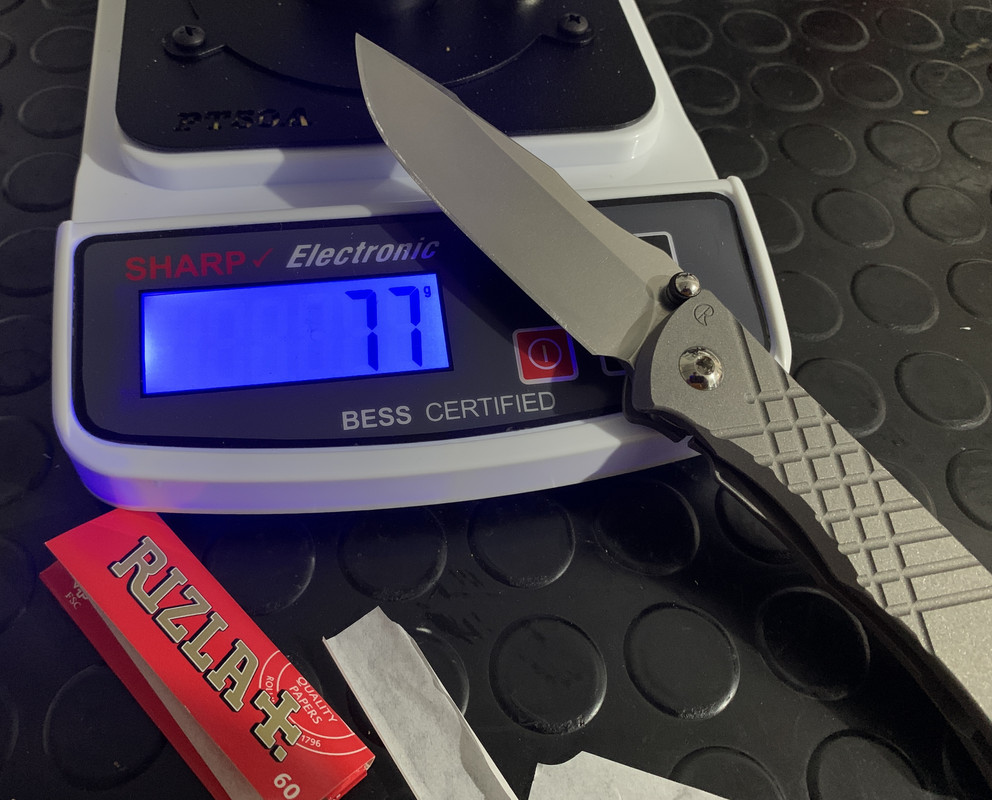
I also like K390 a lot. 👍


Speaking of Stroppy Stuff, he has a great video about checking, deburring and verifying with BESS at every step along the way, using a K390 Delica. You may have seen it?

It opened my eyes at the time. Not specifically Tormek related, but many of these techniques are easy and useful to incorporate. The deburring principles are universal and also applies to the Tormek.


#15
Yes I am convinced that you still have a burr at 200 BESS.

I started to test my edges after I read Vadim's opinion about lingering burrs over 100 BESS. In my experience he was spot on.

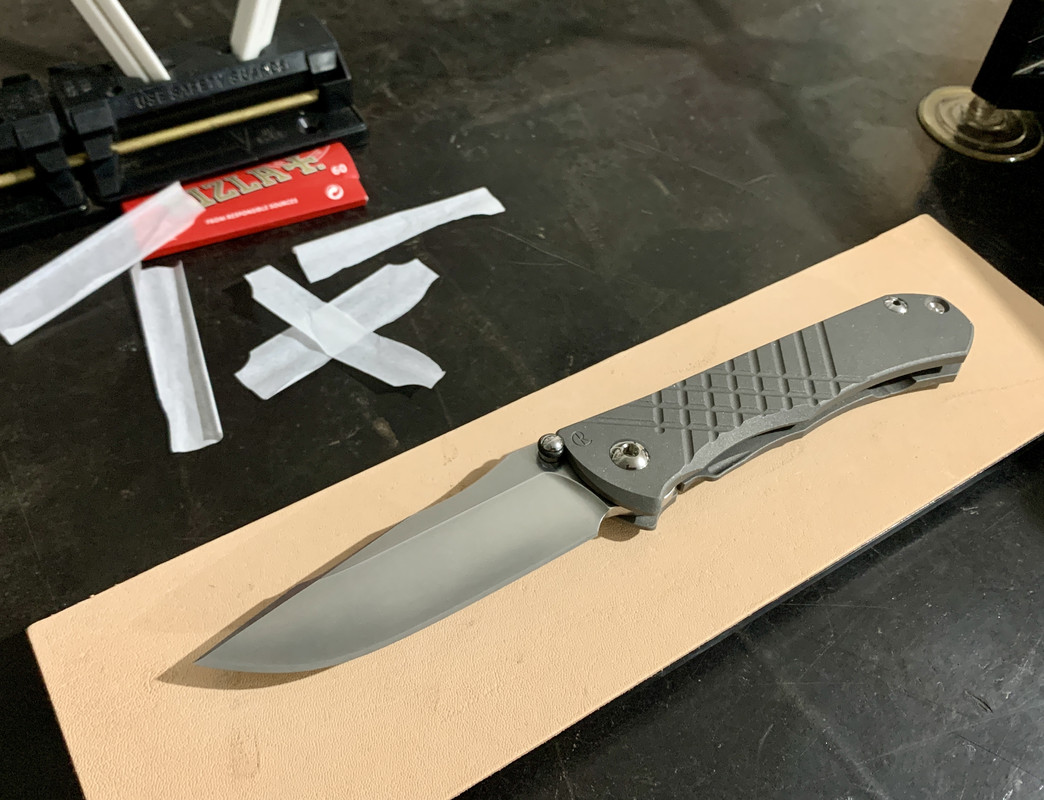
I also like and use his very simple Rizla cigarette paper cutting test to detect a burr. In my experience, if a fresh edge (finished at 1000+ grit and stropped to remove the burr) does not cleanly slice thin Rizla paper from heel to tip, I know I still have a burr. This burr is small enough that I cannot see it under bright light or feel it. A sub-1000 grit edge or even a tiny burr does not cut Rizla paper cleanly.


I sharpened the Umnumzaan above on the Edge Pro, but the Tormek is no slouch... At the moment I feel I can get sharper edges with the diamond wheels than the SG. This was on the DE-250 diamond wheel and stropped.


I was always a "coarse/toothy edge" kinda guy, until I read this article. These incredible micrographs made me more aware of persistent burrs, and made me pay much more attention to deburring. This whole site is a gold mine of knowledge.

https://scienceofsharp.com/2024/02/03/seven-misconceptions-about-knife-burrs/